The Pact will come into force in June 2026 and entails far-reaching changes to how asylum and migration are managed within the Union. In the policy brief The Child Rights Perspective in the EU Migration and Asylum Pact, Rebecca Thorburn Stern analyses what this new regulatory framework means for children’s rights – both at EU level and in a Swedish context.
This policy brief examines the extent to which a child rights perspective characterises the Pact. The analysis is based on the Convention on the Rights of the Child and the EU’s rights framework, where principles such as the best interests of the child, non-discrimination and the right of the child to be heard are central. The brief also highlights the measures proposed to implement the Pact in Sweden.
Key conclusions and recommendations
- Operationalise the child rights perspective in the application of the Pact
National guidelines should be developed on how children’s rights are to be upheld in practice, including child-friendly information and communication, how the right to be heard can be ensured for all children, both unaccompanied minors and children in families, as well as requirements for child rights expertise within all relevant authorities. - Limit the use of border and accelerated procedures for children
The discretion afforded by the Asylum Procedures Regulation should, as far as possible, exempt children from border and accelerated procedures. The assessment of the child’s best interests should, as a general rule, result in children being referred to the standard asylum process with full guarantees of legal certainty. - Safeguard privacy and personal integrity
Limit the collection of biometric data relating to children to what is absolutely necessary and exclude the use of any form of coercion against children in these situations. Where there is doubt as to whether the child in question has reached the age of six, a precautionary principle should be applied so that children younger than six do not risk having their fingerprints and other biometric data collected. - Treat children as children first and foremost, migrants second
Migration policy objectives regarding limited immigration should not be allowed to overshadow the obligations that the Convention on the Rights of the Child and other human rights instruments impose on states. Children in a migration context should be treated first and foremost as children, with all that this entails in terms of consideration for the best interests of the child and other central principles of the Convention on the Rights of the Child, and only secondarily as migrants.
About the author
Rebecca Thorburn Stern is a professor of international law. Her main areas of research are human rights, with a particular focus on children’s rights, asylum and migration law, and the relationship between international law and national law. During the period 2024–2027, she is also a visiting professor of human rights at the Department of Law at Lund University and is also affiliated with the Institute for Futures Studies.
The policy brief was published on 20 My 2026.
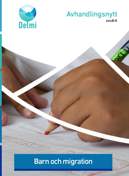
Photo: Kateryna Hliznitsova via Unsplash.